
General Muhamadu Buhari, the former 7th Head of State of Nigeria earlier today was endorsed by 12 APC governors on the platform of All Progressive Congress to create a simple and easy primary election currently going on in the city of Lagos. He is favoured to win overall party’s nomination later today and it also believed that he is the better candidate that can go all way to defeat the incumbent President Jonathan of the People’s Democratic Party in the February 14th Presidential election.
He was a former Military Officer that has served Nigeria in various capacity among which include the following: Military Governor of defunct North West, Petroleum Minister, Chairman NNPC, Military Head of State for 1 year and 8 months and Executive Chairman of the defunct PTF.
“He is favoured to win overall party’s nomination later today and it also believed that he is the better candidate that can go all way to defeat the incumbent President Jonathan of the People’s Democratic Party”
Buhari has distinguished himself as an incorruptible public servant. He is a gentleman of high repute, a disciplined officer and a patriotic statesman.
The 12 APC governors that agreed to support General Muhammadu Buhari as the presidential candidate are: Abdulfatah Ahmed (Kwara), Abdulaziz Yari (Zamfara), Abiola Ajimobi (Oyo), Adams Oshiomhole (Edo), Aliyu Wammako (Sokoto), Babatunde Fashola (Lagos), Ibrahim Geidam (Yobe), Kashim Shettima (Borno), Tanko Al-Makura (Nasarawa), Ibikunle Amosun (Ogun), Rauf Aregbesola (Osun) and Rotimi Ameachi (Rivers).
Early indication shows that the governor of Kano, Kwankwaso may eventually support the former head of state candidacy.




The Executive Governor of Ondo State, Lucky Aiyedatiwa, on Friday inaugurated the 12 newly appointed Commissioners into the State Executive Council.
This was disclosed in a statement released by the Governor’s Chief Press Secretary Ebenezer Adeniyan on Friday.
The newly inaugurated Commissioners are Pastor Segun Ayerin, Mr Olaolu Akindolire, Alhaji Amidu Takuro, Dr Banji Ajaka, Mr Boye Ologbese, Mr Sunday Akinwalire, Deaconess Lola Fagbemi, Mr Saka Yusuf Ogunleye, Mr Rasheed Badmus, Mr Olayato Aribo, Mr Adewale Akinlosotu and Barr Gbenga Olaniyi.
The Governor urged them to justify their appointments through dedicated service, emphasizing the administration’s commitment to accelerated development and good governance.
The governor said; “Let me congratulate the newly inaugurated appointees for being worthy of consideration as Honourable Commissioners in Ondo State. Some of you are returning, while others are new Commissioners. In the main, you have a duty to justify your appointment or reappointment as the case may be. I must inform you that this administration is in a hurry to deliver on its mandate and make life more meaningful to the people.
“The torch of accelerated development that we hold aloft in trust for the people is irreversible. You must guard your loins and hit the ground running in your various offices. You must foster a good working relationship with the workers, especially the Permanent Secretaries and other Accounting Officers.
“Let us bear in mind that the government and people of Ondo State are united in their thirst for credible performance, development and good governance. You must excuse corruption or any act that is not nurturing to good governance and overriding public interest. Thus, I like to implore all friends, families and well-wishers of the new appointees to refrain from putting undue pressures on them so that they can concentrate and discharge their duties in the overall best interest of the State.”
Highlighting the administration’s accomplishments in various sectors, Governor Aiyedatiwa emphasized the strides made in addressing salary arrears, gratuity payments, employment opportunities, infrastructure development, and security enhancement.
He stressed the administration’s focus on collaboration with federal and corporate entities to stimulate economic growth and ensure food security in the state.
The Governor called for peaceful conduct during the upcoming gubernatorial primary elections, stressing the importance of upholding democratic principles and avoiding divisive actions.
Earlier in his welcome address, the Secretary to the State Government, Hon. Tayo Oluwatuyi, emphasized the importance of wholehearted commitment from the newly inaugurated Commissioners. He stressed that their forthcoming responsibilities transcend mere formalities, symbolizing principles of justice and equity.
Oluwatuyi urged them to labor tirelessly, demonstrating unwavering dedication, reminding them that the authority vested in their positions is not for personal enrichment but for the welfare of the people.
Speaking on behalf of the newly inaugurated Commissioners, Dr Banji Ajaka appreciated Governor Aiyedatiwa for the trust reposed in them, with a promise not to disappoint the Governor and the people of the State.

The Olubadan-designate, Oba Owolabi Olakulehin is ill and not physically fit to rule as the 43rd Olubadan of Ibadanland.
The Otun-Balogun Olubadan of Ibadanland, Abimbola Ajibola, stated this on Tuesday.
Olubadan stool became vacant after the demise of the late Olubadan of Ibadanland, Oba Lekan Balogun, who reigned for two years and died at 81.
Olakulehin would rank among the oldest monarchs to ascend to the position.
Ajibola, who made this known in a briefing at his Sanyo private residence in Ibadan, the Oyo State capital, said the Olubadan-Designate be given time to get well before he is pronounced.
He said: “What is in need for hurry? Someone (Olakulehin) we have not seen. He has not spoken with us. He has not spoken with Ibadan people.
“I am his second in command, I’m his lieutenant. He has not called me to say, ‘My Otun, I’m back. So, tell your people. And when are you seeing me?’ They are just forcing him because of their own selfish interest.”
Latest News
IGP LAUDS OUTSTANDING RECOGNITION FOR NPF CONTINGENT IN INTERNATIONAL PEACEKEEPING MISSIONS

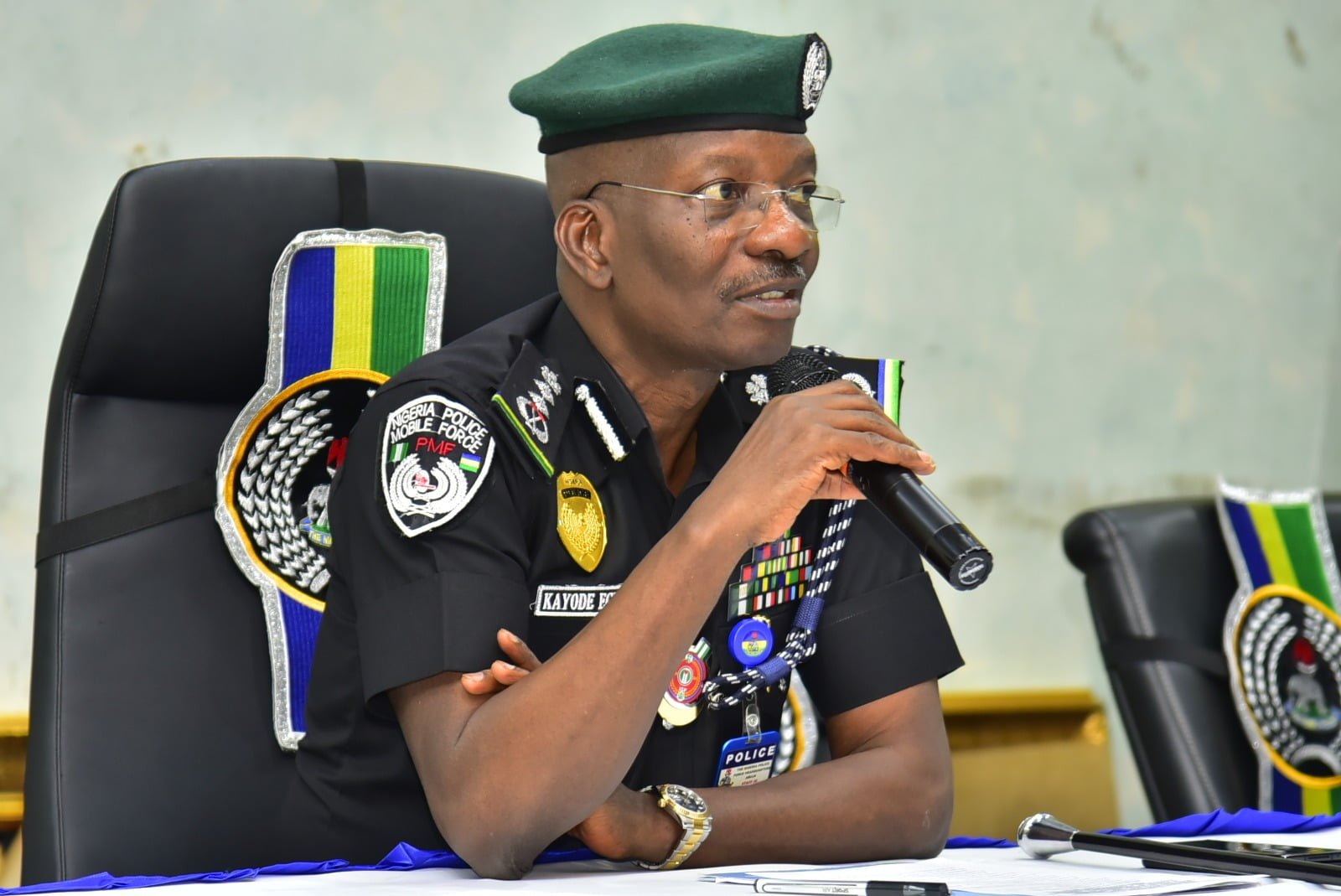
Reassures Excellent Service Delivery
The Inspector General of Police, IGP Kayode Adeolu Egbetokun, has lauded the recent commendations for personnel of the Nigeria Police Force in international peacekeeping efforts.
The United Nations, through its Multidimensional Integrated Stabilization Mission in Mali (MINUSMA), recognized 140 officers and men of the Nigeria Police Contingent for their professionalism and outstanding performance in fostering peace and stability in Northern Mali. Similarly, the African Union presented Awards of Excellence and Professionalism to the Nigeria Formed Police Unit, comprising 160 officers and men deployed in Somalia, acknowledging their gallantry, professionalism, and dedication in countering Al-Shabaab terrorist elements.
This was disclosed in a statement released by the Force’s Spokesperson ACP Muyiwa Adejobi on Saturday.
According to Adejobi, the accolades extend beyond individual police officers deployed to UN missions in South Sudan, Central African Republic, Democratic Republic of Congo, Mali, and Somalia, among others. The Nigeria Police Force has consistently received awards commending the professionalism, dedication to duty, and exceptional performance of its officers, earning them a reputation as among the best in the field. Furthermore, Nigeria Police officers hold key positions at the Police Division of UN Headquarters and African Union Headquarters, where they continue to diligently execute their duties, garnering respect and admiration.
The Economic Community of West African States (ECOWAS) has expressed confidence in the integrity, professionalism, and outstanding performance of NPF officers. Consequently, ECOWAS has requested the deployment of Nigeria Police officers and men to its missions in Guinea Bissau and Sierra Leone. It is noteworthy that upon arrival in peacekeeping missions, NPF officers undergo competence-based interviews and selection processes aligned with international standards and best practices. Their consistent placement in strategic positions is proof of their competence and commitment to the missions’ success.
The Inspector General of Police expresses gratitude for these prestigious recognitions, which serve as a testament to the dedication, professionalism, and outstanding performance of Nigeria Police Officers in promoting global peace and security. The IGP further reassures that the police will consistently adopt modern standard operating procedures to accord quality service delivery, in all spheres, to Nigerians across the country.
-
 Nigeria News4 days ago
FG Locates Fleeing Binance Executive In Kenya
-
Business6 days ago
Nigeria’s Central Bank fires 50 more staff
-
Culture5 days ago
Olupejobi Royal Family Of Otto & Mainland To Meet On April 27th
-
Entertainment4 days ago
Jumoke Aderounmu Was Not Sick, She Died In Her Sleep’ –Family Opens Up
-
Politics2 days ago
Ibi Giga Postpone inauguration of new excos, direct total Mobilisation for Ayedatiwa ahead of primaries
-
Politics7 days ago
We regret voting Tinubu – Northern elders reveal plans for 2027
-
Nigeria News3 days ago
Sunday Igboho, Akintoye Distance Self From Yoruba Nation Agitators Invasion.
-
Foreign3 days ago
Iran Attacks Israel, Launches Several Missiles And Drones


